






Water Management
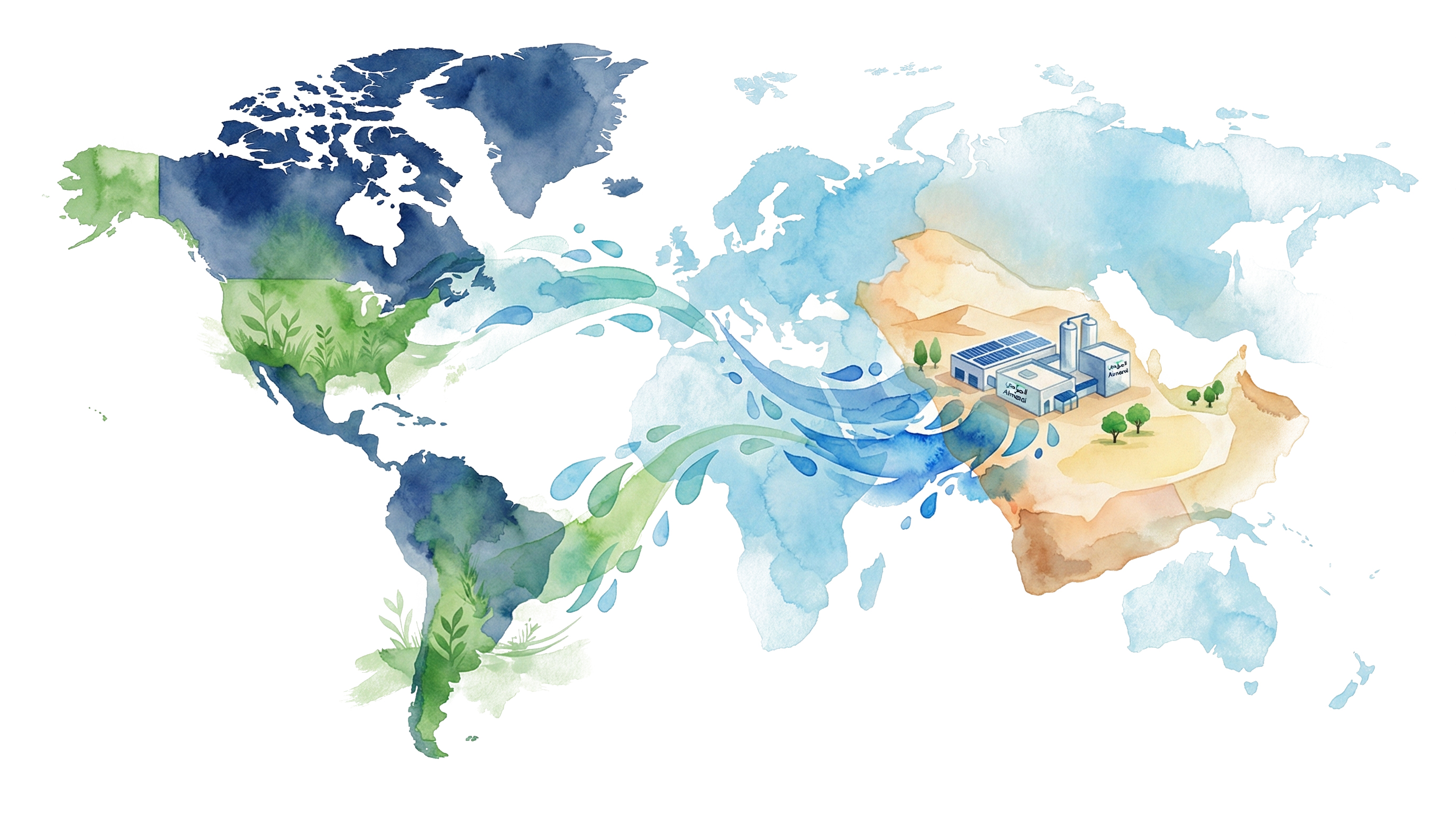
Water management is an integral part of operations, given the scale and intensity of our production and supply chain. Our dairy and poultry production and processing activities depend on freshwater withdrawals in the arid GCC region, primarily from municipal and groundwater sources. Water is also embedded in our upstream feed supply. Following Saudi Arabia’s green fodder cultivation ban, feed crops are sourced through overseas operations and supply partners in countries such as the United States and Argentina, where irrigation demand can be significant and concentrated in water stressed basins.
Why This Matters
Wastewater discharges are also a material consideration across processing facilities. Even where treatment systems are in place, treatment performance and monitoring are required to manage potential effects on local water quality and to maintain compliance. Regional aridity and increasing sensitivity to land degradation and desertification reinforce the importance of managing water withdrawals and discharges as continuing operational requirements.
Water availability and regulation also shape operating conditions over time. In the GCC, groundwater depletion, limited recharge, and rising salinity can increase pumping and treatment requirements and raise exposure to tighter oversight of abstraction and discharge through tariffs, licensing, and efficiency benchmarks. In upstream sourcing regions, irrigation restrictions and climate variability can constrain feed yields and increase procurement volatility, with implications for supply stability and input costs.
Our Approach
Our approach to water management is grounded in our Environmental Policy and the Water Position Statement. The latter was reviewed and updated in 2025 to strengthen its operational focus and reaffirm key themes covering efficiency, stewardship, and culture.
New Policies for Stewardship
We have introduced a dedicated Water Policy to set clearer expectations on operational commitments, compliance, and disclosure. In 2025, we also introduced a Desertification Policy aligned with Saudi Vision 2030 environmental goals, covering afforestation, anti-deforestation practices, and supplier screening.
These policies apply across our facilities in the GCC and to our owned operations in key sourcing regions. They are supported by requirements and monitoring expectations that extend to relevant upstream suppliers and sourcing activities, reinforced through supplier standards and contractual terms.
Oversight of water management sits at Board level, with executive accountability for implementation and monitoring supported through the Quality and Support Services (QSS) Division. Operational performance is monitored through the Water Steering Group, established in 2019, and through routine reporting cycles that track water withdrawals, consumption, reuse, and related indicators across sites. We also reference external frameworks such as the Net Positive Water Initiative to inform our approach to shared basin considerations and efficiency-related practices.
Key Developments
During the reporting period, we progressed a range of operational initiatives to improve water efficiency and reduce losses across key sites.
Facility Level Water Optimization
At our Al Kharj operations, optimization of the cooling system continued to deliver water savings following implementation in April 2023, with further efficiency upgrades planned. Across other facilities, equipment upgrades and maintenance programs were implemented to reduce leakage and improve performance in water-intensive systems, including replacement and refurbishment of cooling and heating components and the rollout of basic water-saving controls in high-use areas.
Water Circularity
We also expanded the practical reuse of treated wastewater across suitable applications. Reuse initiatives continued across agricultural and operational settings, including cleaning activities and composting-related uses, supporting more efficient water circulation within sites and reducing reliance on freshwater withdrawals where feasible.
Regulatory Alignment
Regulatory oversight and compliance expectations increased during the year, with a stronger inspection presence across sites and a particular focus on wastewater treatment and water use practices. In response, we strengthened monitoring and reporting across facilities and advanced planning for upgrades required to meet evolving regulatory requirements, including those under the National Center for Environmental Compliance. We also maintained structured engagement with public authorities, including ongoing coordination with the relevant water authority in relation to commitments under the Net Positive Water Initiative.
Looking ahead, we are assessing further site-level initiatives to strengthen water stewardship across operations. These include expanded use of sensor-based controls and flow monitoring in operational areas, deployment of higher-efficiency cleaning equipment, and progression of wastewater treatment infrastructure projects at selected facilities, including new or upgraded effluent and sewage treatment systems. We are also evaluating a renewed focus on water stewardship and the integration of Net Positive Water principles more consistently across key sites.
Building Technical Capability through Partnership: The Ireland–Saudi Dairy Knowledge Exchange Program
In 2025, Almarai launched the Ireland–Saudi Dairy Knowledge Exchange Program in collaboration with Tirlán, an Irish dairy co-operative, and Bord Bia (Irish Food Board), a semi-governmental agency for the promotion of Irish food, drink, and horticulture in Ireland and abroad.
The initiative enabled Almarai professionals to work closely with Tirlán teams, gaining hands-on familiarity with best practices in water management, wastewater treatment, and whey protein recovery, and translating these learnings into practical improvement opportunities across Almarai operations.
Key outcomes included:
- Building a clearer understanding of wastewater generation, treatment, and reuse practices, including benchmarking Chemical Oxygen Demand (COD) and Biochemical Oxygen Demand (BOD) reduction methods, reviewing EU and Saudi regulatory requirements, and identifying realistic water-saving and reuse opportunities applicable to Almarai sites.
- Mapping protein recovery across dairy processes and identifying opportunities to reduce product losses and recover protein and fat before wastewater treatment, supporting efforts to turn by-products into value-added uses while minimizing waste.
- Strengthening internal capabilities through exposure to standardized operating procedures, performance dashboards, audit checklists, and root-cause investigation approaches.
The program will continue in the coming years through a return phase.
Progress Toward Targets
Current Targets
Status

Increase water efficiency across Manufacturing, Sales, Distribution, and Logistics Divisions by 15% by 2025 (2018 baseline).
Target on track as of 2025.
Initiate and support collaborative efforts with stakeholders to address water risk and enhance conservation by 2025.
Target achieved as of 2025.
Metrics
14 million m3
Water withdrawal
20%
Water recycled/reused
6 m3/t
Manufacturing water intensity*
*Intensity values are expressed per metric ton of finished product.
Water use is driven primarily by manufacturing operations across Almarai’s food categories, with total withdrawal reflecting production scale and site-level water availability. Alongside volumes, Almarai tracks efficiency indicators such as manufacturing water intensity and the share of water recycled and reused to inform operational improvement priorities, particularly in a water-stressed operating context.
Manufacturing water intensity in 2025 was broadly in line with the 2018 baseline. Year-to-year movement reflects Almarai’s expanding footprint, including capacity additions and new facilities, which can temporarily affect water efficiency during commissioning and ramp-up.
See our full Water Management data set here.