






Almarai’s business model, at its core, is a vertically integrated operating system designed not only to deliver “Quality you can trust” at national scale, but also to support expansion into new categories, channels, and geographies for long-term value creation. The Group’s assets and capabilities make execution efficient and strengthen resilience across the value chain. This reliability helps sustain the availability of essential products and contributes to food security across the Group’s core markets.
Quality is built into each stage of the end-to-end process, from biological foundations and manufacturing controls to cold chain distribution and brand stewardship. This operating system also enables progress on the three pillars of “Doing Better Every Day,” Almarai’s sustainability agenda: Caring for People, Protecting the Planet, and Producing Responsible Products.
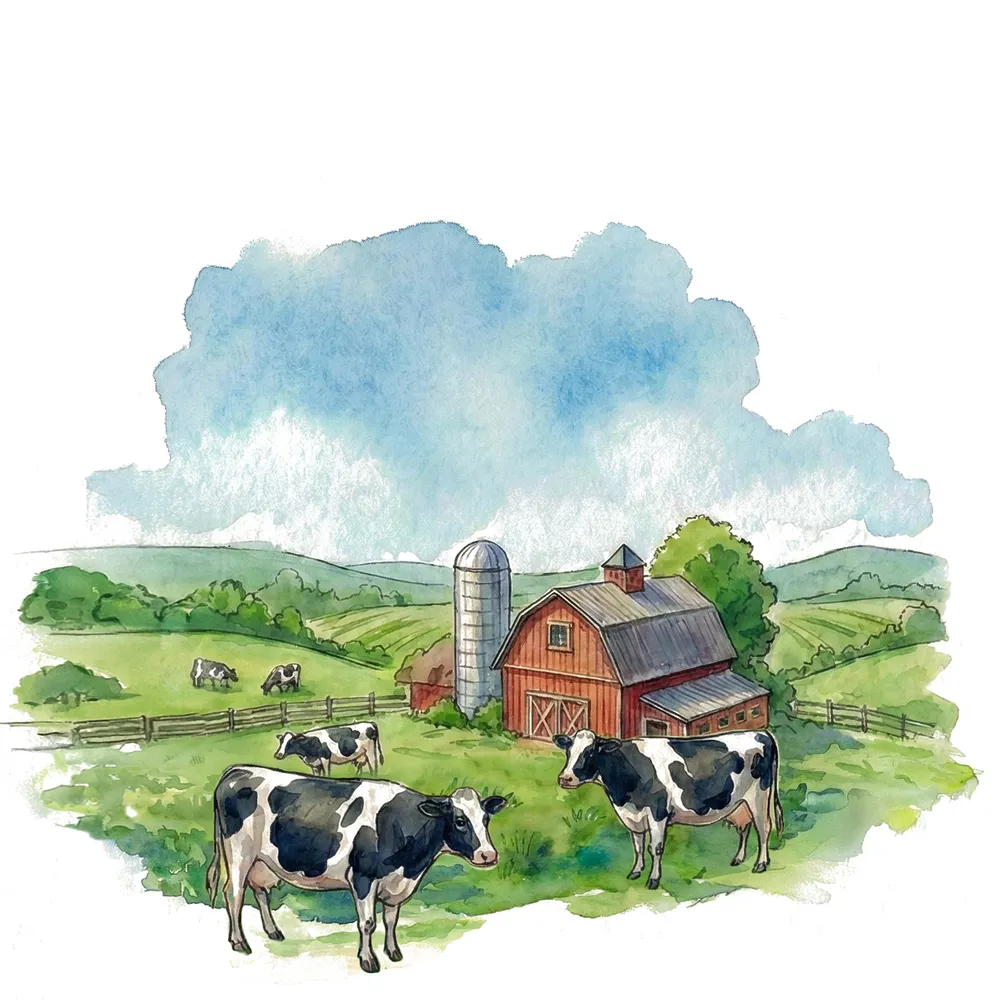
Biological foundations
Natural Resources
Water, energy, and land inputs for a high-volume food system, managed through controls that maintain availability, meet regulatory requirements, and reduce resource intensity and emissions.
- Water recycled and reused: 2,947,938 m³
- Manufacturing energy intensity: 1229.3 kWh/t finished product
- Manufacturing emissions intensity: 0.25 tCO2e/t finished product
- Waste sent to landfill: 50% (2018 baseline: 70%)
- Commitment to the Net Positive Water Initiative
Feed Supply
Consistent feed inputs through owned overseas arable operations and supply partners, maintaining livestock performance and production stability.
- Sourcing footprint across the United States and Argentina (owned farms and supply partners)
- Owned arable farmland under production: 27 farms, 27,486 ha, producing 257,784 t of feed inputs in 2025 (of 618,798 t total feed exported to Almarai)
- Silver level verification under the Sustainable Agriculture Platform (Fondomonte)
Herd and Flock Health
Health and productivity of dairy herds and poultry flocks through veterinary oversight, controlled housing, nutrition, and welfare standards.
- Scale of operations: 8 dairy farms with over 189,000 cows; 7 poultry farms with over 1,700 active poultry houses
- 24-hour veterinary care across operations
- Temperature-controlled housing and biosecurity protocols
- NSF Global Animal Welfare Standards (GAWS) certification
- Zero non-compliance recorded against animal welfare standards
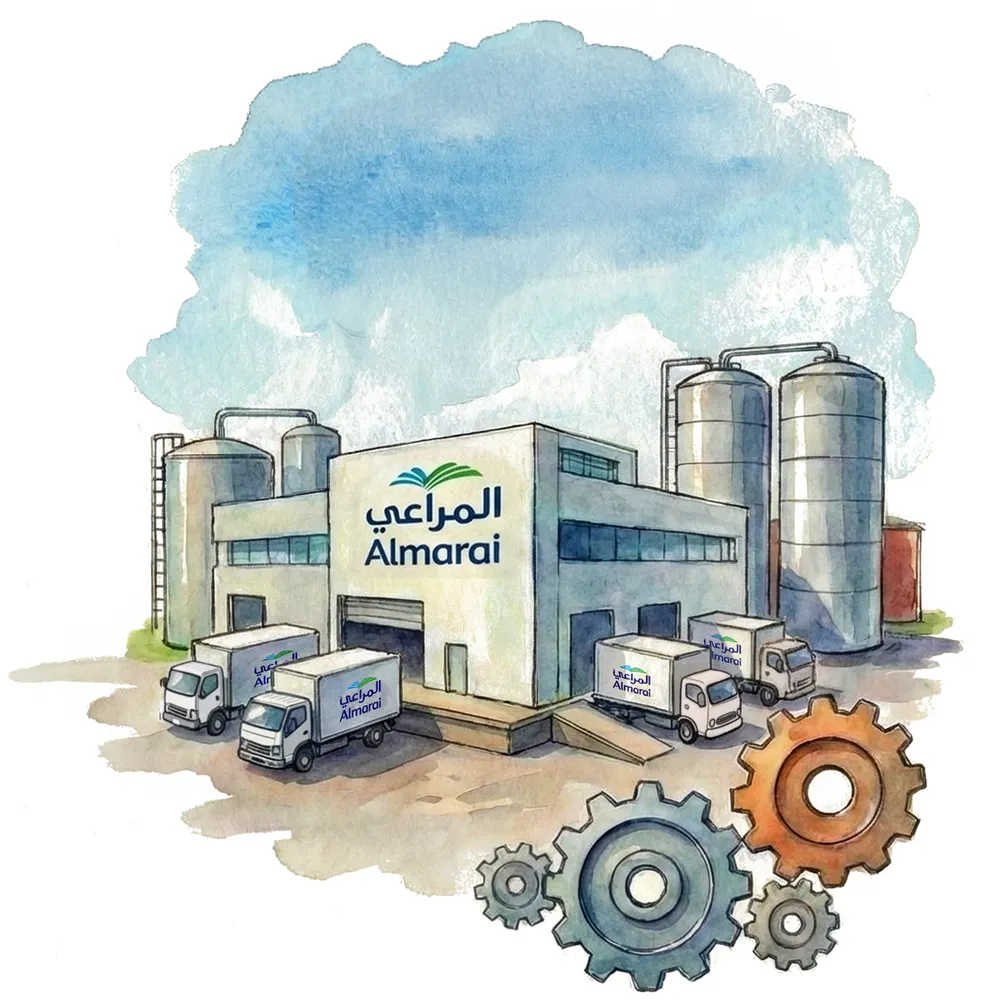
Manufacturing and market execution
Processing Capacity
High-volume manufacturing under world-class food safety and quality management systems.
- Manufacturing: 34 production facilities across 19 plants in dairy, poultry, bakery, juice, and infant nutrition
- FSSC 22000 (GFSI-recognized) and ISO 9001 certification across all sites
- Dairy production: 1.5 billion liters annually
- Poultry processing: 2 facilities processing over 300 million birds annually
- Annual sales volume: 3.0+ billion kg
Cold Chain, Logistics, and Distribution
Protects product integrity and availability across long distances through owned, high-frequency distribution, serving traditional trade, modern trade, foodservice, wholesale, and e-commerce.
- 129 sales depots and a fleet of 12,000+ vehicles
- Frozen warehousing and transport capability strengthened through the acquisition of Etmam Logistics
- 2.3+ billion kg of products handled and delivered annually across the GCC
- Distribution coverage across 7 countries in the GCC and MENA, reaching 220,000 outlets
Brand Strength and Consumer Trust
Enables repeat purchase and brand preference across core food categories through portfolio breadth, responsible consumer engagement, and community presence.
- More than 20 leading brands
- Annual consumer reach: more than 150 million
- Responsible Marketing Policy with safeguards on age targeting and child-directed content
- Nutrition labeling and claims aligned with SFDA and GSO requirements
- Community and social responsibility investment in GCC: X 50.47 million in 2025 (2.1% of annual net profit)
Capital, people, and innovation
Capital headroom
Funds a multi-year investment cycle through operating cash flow and diversified financing, while keeping leverage and working capital within defined limits.
- Operating cash flow: X 5.5 billion
- Net debt/EBITDA: ~2.5x
- CapEx: ~20% of revenue (normalizing to ~7–8%).
Product R&D capability
New product development and portfolio expansion across categories and channels.
- Disciplined, cross-functional innovation ecosystem enabling faster product development and scalable commercialization across core and adjacent categories
- Consumer-led innovation pipeline focused on high-potential growth opportunities across categories and channels
Workforce scale and capability
A large operational workforce that enables consistent execution across farms, plants, logistics, and commercial operations, supported by standardized operating practices and health and safety controls.
- 50,000+ employees across 73 nationalities
- ISO 45001:2018 implemented across all divisions
- Employee and contractor lost-time injury rate: 1.22 per million man-hours worked
- Nitaqat status maintained at Platinum and High Green levels across applicable workforce categories
Supplier base and scale
Stabilizes input availability and cost across a high-volume, multi-category system, with assurance processes for higher-risk inputs.
- Suppliers: 1,900+
- Raw material items: 66,000+
- Materials spend (2025): X 11 billion
- High risk ingredient suppliers certified (GFSI recognized): 100%
Digitalization and automation
A digital core that drives efficiency, strengthens planning and control, and enhances resilience across a national-scale operating system.
- SAP S/4HANA cloud core upgrade
- Real-time KPIs and forecasting
- Unified digital service platform
- Layered cybersecurity controls
All figures are as of 31 December 2025.