








Animal Welfare
Maintaining the highest standards of animal welfare is central to Almarai’s operations, given our reliance on large-scale dairy and poultry farming and the close connection between animal health, food safety, and production resilience. We manage animals across their full lifecycle, covering breeding, housing, handling, transport, and veterinary care. This work requires consistent oversight, strong biosecurity, and skilled human interaction. How these systems are designed and managed directly affects animal wellbeing, operational stability, and product quality.
Why This Matters
Strong animal welfare practices also contribute to the long-term performance and resilience of our business. Healthy animals contribute to stable productivity, lower mortality, and reduced disruption from disease outbreaks, while investments in veterinary oversight, monitoring, and preventive care help manage costs and protect continuity. Operating to recognized animal welfare standards reinforces trust with regulators, customers, and investors, sustaining our license to operate in alignment with evolving market and financing expectations.
Our Approach
Our approach to animal welfare is guided by our Animal Welfare Policy, which is applied across our dairy and poultry operations and sets clear expectations for the humane treatment of animals throughout their lifecycle.
The Animal Welfare Policy
The policy is aligned with internationally recognized principles, including the World Organization for Animal Health (WOAH) framework and the Five Freedoms of Animal Welfare. These principles emphasize ensuring animals are free from hunger and thirst, free from fear and distress, free from heat stress or physical discomfort, free from pain, injury, and disease, and free to express normal patterns of behavior.
Animal welfare requirements are embedded within our farming and poultry operations with standards for animal handling, housing, transport, and veterinary care. The policy enforces a zero-tolerance approach to animal abuse, mistreatment, neglect, or negligence, and requires all personnel involved in animal care to be appropriately trained and competent in humane handling practices. Compliance with applicable laws and regulations is mandatory, alongside internal requirements designed to promote animal health, wellbeing, and responsible production practices.
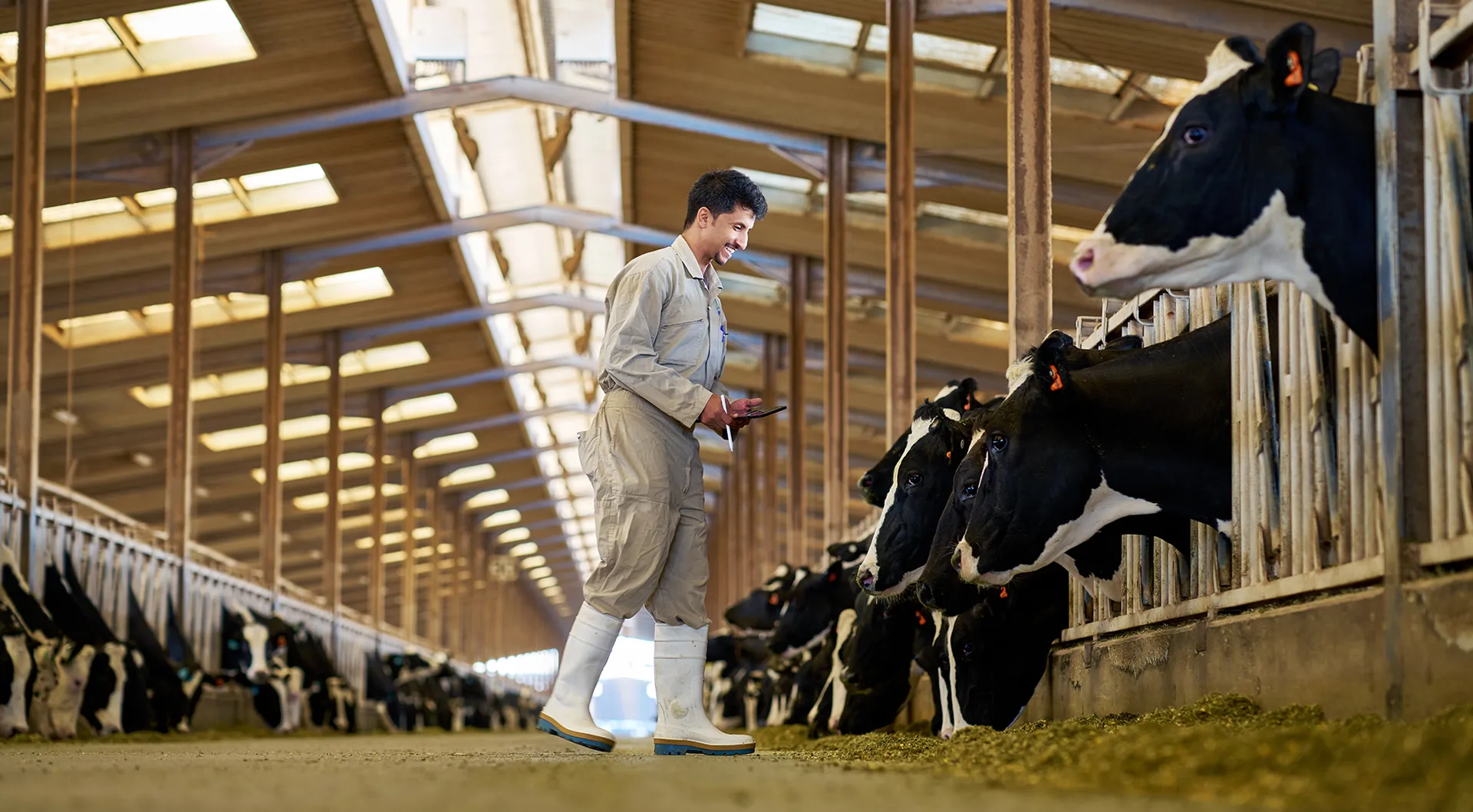
Oversight of animal welfare performance is integrated into our operational management and assurance processes. Compliance with policy requirements is supported through internal controls and independent verification, including external certification where applicable. In 2022, Almarai achieved certification under the NSF Global Animal Wellness Standards (GAWS) for its dairy and poultry operations, confirming alignment with recognized international best practices in animal welfare. Through this framework, we seek to maintain high standards of animal care, operational resilience, and confidence in the integrity of our production systems.
Key Developments
Animal welfare practices continued to operate in line with regulatory requirements and Global Animal Wellness Standards (GAWS) across dairy and poultry operations during the reporting period. All certified sites remained within scope, with certificates in date and surveillance audits conducted in accordance with the GAWS framework.
For 2025:
- Zero animal welfare violations or incidents of animal abuse recorded.
- Zero non-compliances identified through internal controls or external certification audits.
Certification performance remained strong, with average audit scores of 96% for dairy farming operations and 99% for poultry farming operations, reflecting consistent application of welfare standards across sites.
Monitoring and Preparedness
Animal health monitoring and biosecurity measures remained in place without material change, supported by ongoing veterinary oversight and established operating procedures. A new contingency plan was implemented within hatchery operations to strengthen preparedness and response capability. Training and awareness activities continued through on-the-job coaching and targeted programs to maintain staff competence in humane handling and welfare management.
Progress Toward Targets
Current Targets
Status

Achieve global animal welfare certification for all dairy and poultry farming operations by 2025.
Target achieved as of 2024.
Metrics
0
Incidents of non-compliance with applicable animal welfare laws, regulations, or voluntary standards related to transportation, handling, and slaughter practices.
100%
Cows in enclosed housing with resting areas
100%
Chickens in enclosed cage-free housing